How to Depill a Sweater Without Damaging the Fibers
You reach for your favorite wool crewneck and there it is: a patch of fuzzy little balls scattered across the chest. Pills are not a defect, and they are not proof that the sweater was cheap. They are what happens when loose fiber ends work their way out of the yarn and tangle together, and almost every knit will do it eventually — some much sooner than others. The encouraging part is that pills sit on top of the fabric, not inside it. Take them off with a bit of patience and the sweater underneath is usually untouched.
Why Sweaters Pill in the First Place
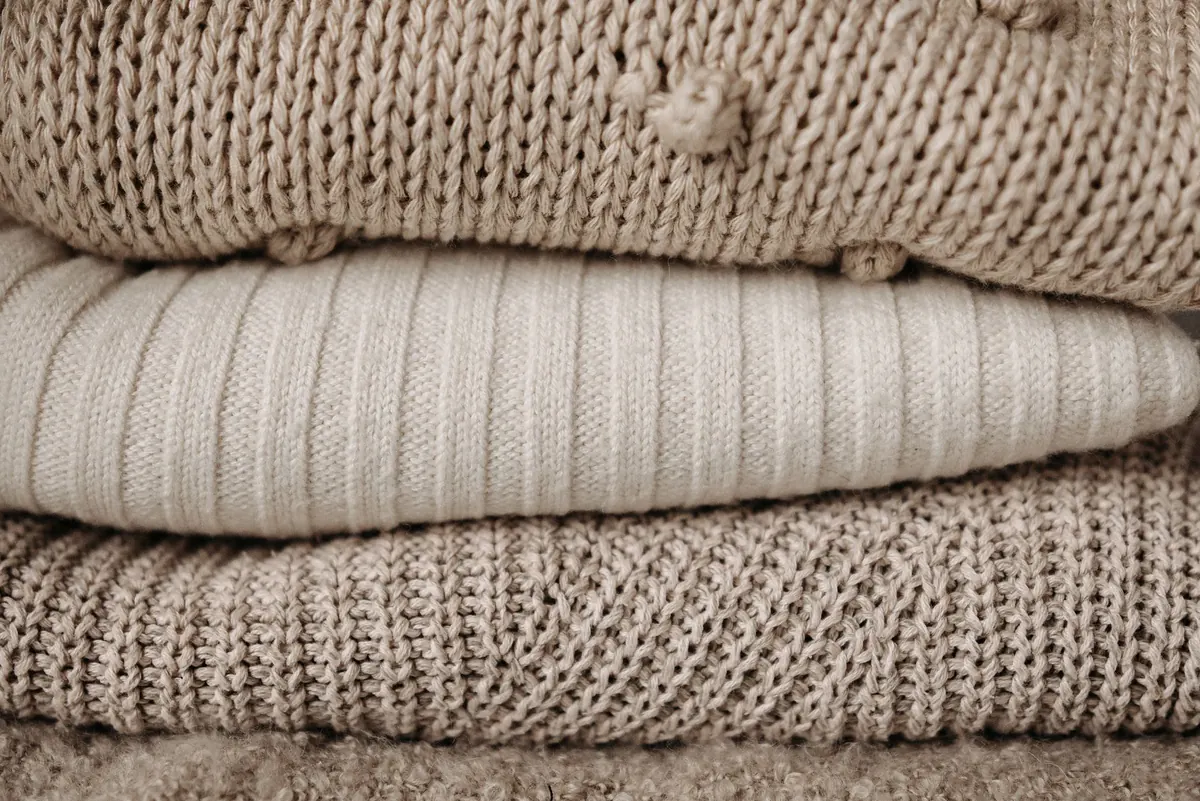
Every knit is made from yarn, and every yarn is made from fibers twisted together. When the surface rubs against something — a coat lining, a seat belt, your own arm — short fiber ends work their way loose. They tangle with each other into small knots of fuzz, held onto the sweater by a few longer fibers underneath. That is a pill.
A few things make pilling more likely:
- Short fibers in the yarn. Cheaper yarns and many mass-market knits use shorter fibers, which escape the twist more easily.
- Loose twist and soft fibers. Cashmere, merino, alpaca and angora are all lovely, and all prone to it. A tightly spun lambswool holds up better.
- Blends, especially wool with acrylic or polyester. The synthetic fibers are strong, so they hold pills onto the surface instead of letting them fall away.
- Friction hotspots. Underarms, cuffs, side seams, the strip where a bag strap crosses your chest, and the lap of any sweater worn under a seat belt.
Where a sweater pills tells you something. Pilling only under the arms means a jacket or a bag is rubbing there. Pilling everywhere, after two wears, means the yarn itself is loosely spun — that sweater will always need maintenance.
Know What You Are Actually Removing
Not every fuzzy patch is a pill, and treating the wrong thing does damage. A pill is a small ball of tangled fibers sitting proud of the surface. A pulled loop is a strand of yarn sticking out; snip it and you may open a hole. Push it back to the wrong side with a blunt needle instead. Mohair, brushed alpaca and angora sweaters have an intentional halo — that fuzzy cloud is the point of the yarn, so keep the shaver away from them entirely. And if the surface looks matted and flat rather than bobbled, that is felting, and no tool will undo it.
The Tools Worth Keeping in a Drawer
- Fabric shaver (electric pill remover). A small handheld device with a perforated screen and a rotating blade. The best choice for large areas and heavy pilling on sturdy knits.
- Sweater comb. Fine metal teeth that catch pills and lift them off. Slower, but the gentlest option for cashmere and fine-gauge wool.
- Sweater stone or pumice block. Works on chunky, hard-wearing wool. Too aggressive for thin knits.
- A fresh disposable razor. Cheap and effective on medium-weight wool when used at a shallow angle. A dull blade tears instead of cutting.
- Small embroidery scissors. For the five or six stray pills you can see individually.
- Lint roller or wide tape. Removes fuzz, pet hair and lint. It will not pull up pills, so don't try to make it.
Skip sandpaper blocks on anything fine, skip blunt blades, and please stop picking pills off with your fingers. That habit drags more loose fibers to the surface and makes the next round of pilling worse.
How to Depill a Sweater, Step by Step
- Wash and dry it first. Dirt and oils stiffen fibers and make them behave unpredictably. Follow the care label, then lay the sweater flat to dry completely.
- Work on a hard, flat surface. A table or ironing board, not your lap. Smooth the fabric with your palm so it lies flat, but do not stretch it tight — tension distorts the knit and pulls fibers into the blade.
- Work one section at a time. Start at a shoulder and move in bands. Small sections let you see what you're doing and keep you from overworking one spot.
- With a fabric shaver, use almost no pressure. Lay the screen flat against the fabric and glide it in short strokes or small circles in one direction. Let the blade do the cutting. Pressing down is what causes holes.
- Empty the chamber often. A full head stops cutting and starts dragging. Tip the fuzz out every minute or two, and clean the blade with the little brush that came in the box.
- With a comb, hold the fabric taut and stroke one way. Short passes, cleaning the teeth as they fill. Combing is slow by design; rushing it snags live yarn.
- With a razor, keep the blade nearly flat. Around a thirty-degree angle, short strokes, fresh blade. Change it the moment it starts to pull.
- Finish with a shake and a lint roll. Loose fuzz left behind will migrate back onto the surface and look like new pilling within a day.
Go slow around seams, ribs and edges
Collars, cuffs, ribbed hems and shoulder seams have more yarn packed into less space, and the machine holds them unevenly. Switch to the comb or scissors in those zones. If a pill is firmly anchored to a visible yarn strand, leave it alone — a small pill is far less noticeable than a hole.
How to Tell When to Stop
Stop when the surface looks smooth at arm's length and slightly fuzzy up close. That fuzz is normal; chasing it further just thins the fabric. Look for the warning signs as you work: a section that starts looking flat or shiny, ribs that have lost their definition, or a spot where you can see the light through the knit. Set the sweater down and check it in daylight before you decide to do one more pass. Very few sweaters need a second session; most need one careful one.
Slowing the Next Round of Pills
- Rest your sweaters. Give each one a day or two between wears so the fibers can recover.
- Wash inside out, cold, on a gentle cycle in a mesh bag — or by hand. Agitation is friction, and friction is what started this.
- Skip the dryer. Heat and tumbling are rough on wool. Lay flat to dry and reshape while damp.
- Ease up on softener and dryer sheets. They leave a coating on fibers that many wool-care guides suggest avoiding.
- Reduce rubbing where you can. A smoother bag strap, a satin-lined coat, a scarf between your neck and a rough collar.
- Store folded, not hung. Hangers stretch shoulders and drag the knit against itself in the closet.
Make It a Five-Minute Habit
Keep your shaver or comb wherever you fold laundry, and give each sweater a quick pass at the start of the season and once every few wears after that. Five minutes with a light hand beats an hour of repair — and it means the sweater you actually love wearing is the one you reach for, rather than the one shoved to the back of the drawer because it looks tired. If you own a fine designer knit or a vintage cashmere you're nervous about, a good dry cleaner or knitwear specialist can depill it for you; that is money well spent on a piece you would rather not experiment on.
Photo: Pavel Danilyuk / Pexels

You Might Also Like
A practical guide to the shoulder room, sleeve width and fabrics that let a winter coat sit comfortably over thick sweaters — and the fit checks worth doing before you buy.
Which knits to wear under a winter coat, in what order, and how thick each layer should be to stay warm without the padded look.