The 10-Point Quality Checklist for Buying Knitwear Online
Two jumpers can look identical in a product photo and arrive feeling like completely different garments — one dense and springy, the other thin, limp and already pilling in the bag. The difference lives in details that rarely reach the top of the page: the fiber list, the gauge, the way the seams are finished, and the numbers buried in the size chart. None of it takes specialist knowledge. You just need to know where to look.
Here is the order I work through before adding a knit to the basket.
Start With the Fiber Label, Not the Buzzwords
Fiber content is listed by percentage, largest first, which makes it easy to catch misleading copy. A "cashmere jumper" that reads 8% cashmere, 60% acrylic and 32% polyester is an acrylic jumper with a nice word in the title.
A quick guide to what you're reading:
- Wool and merino hold warmth, spring back into shape and resist odor. Merino is finer, so it feels softer against skin.
- Cotton is cool and easy to wash but has little memory — it stretches at the elbows and hem.
- Alpaca and mohair give drape and a soft halo, with less elasticity than wool.
- Cashmere is light and warm, but pills more than most people expect.
- Nylon and elastane in small amounts, usually 2–10%, add strength and recovery. In a wool blend, a little nylon at the cuffs and hem is a good sign, not a shortcut.
Acrylic and polyester aren't automatically bad — they keep the price down and hold color — but they pill and won't breathe like animal fibers. If the fiber list is hidden behind a plus sign, open it. If it's missing, ask.
Gauge and Weight: How Fine Is the Knit?
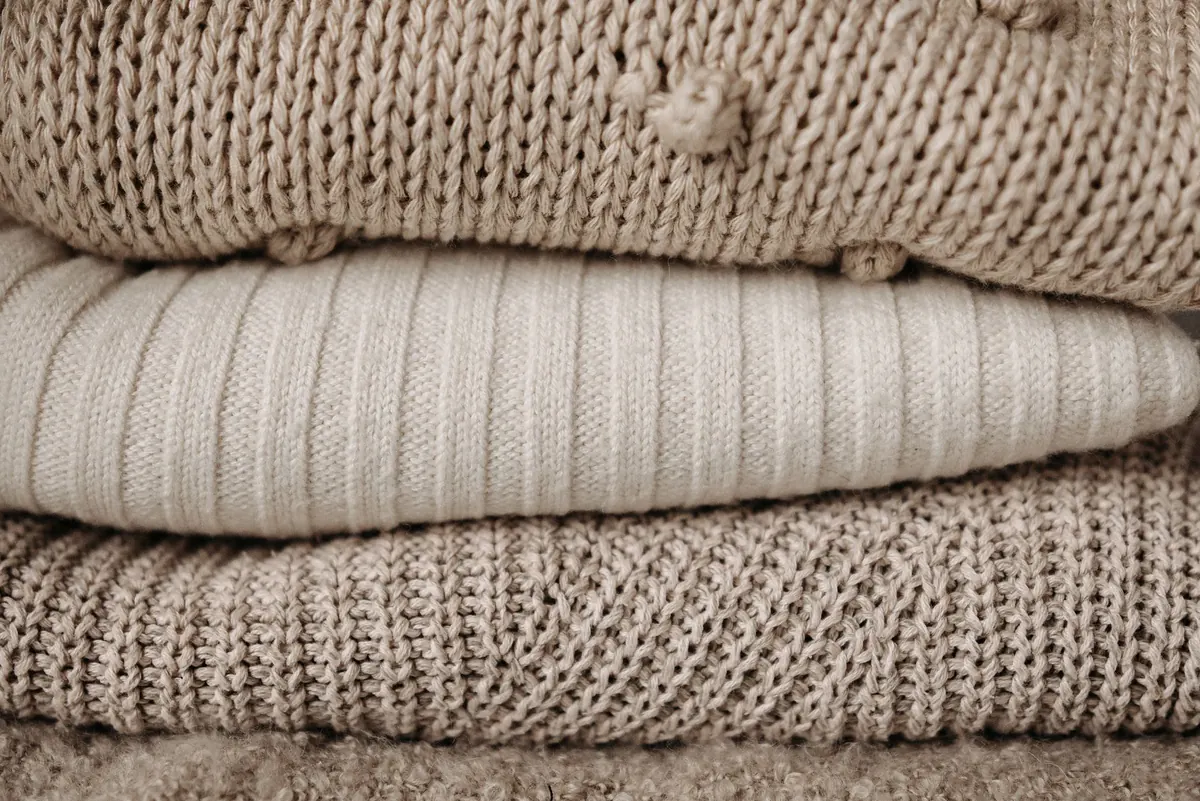
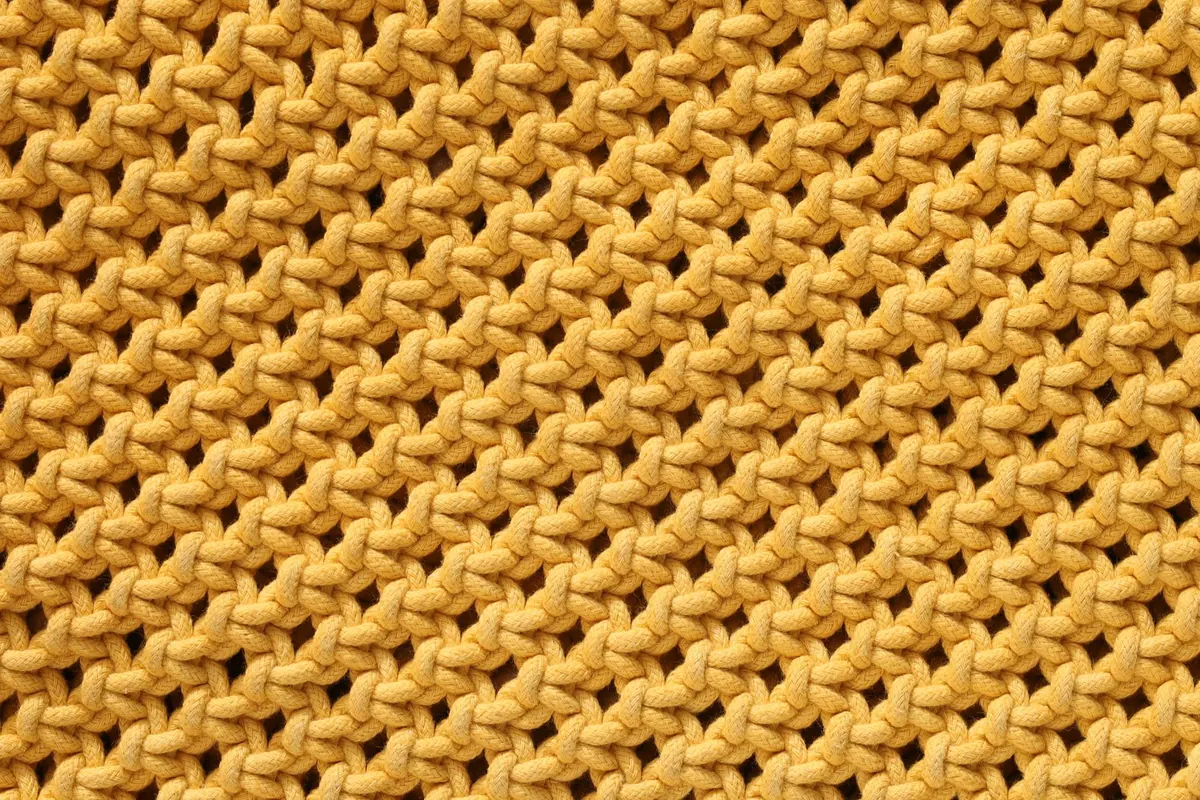
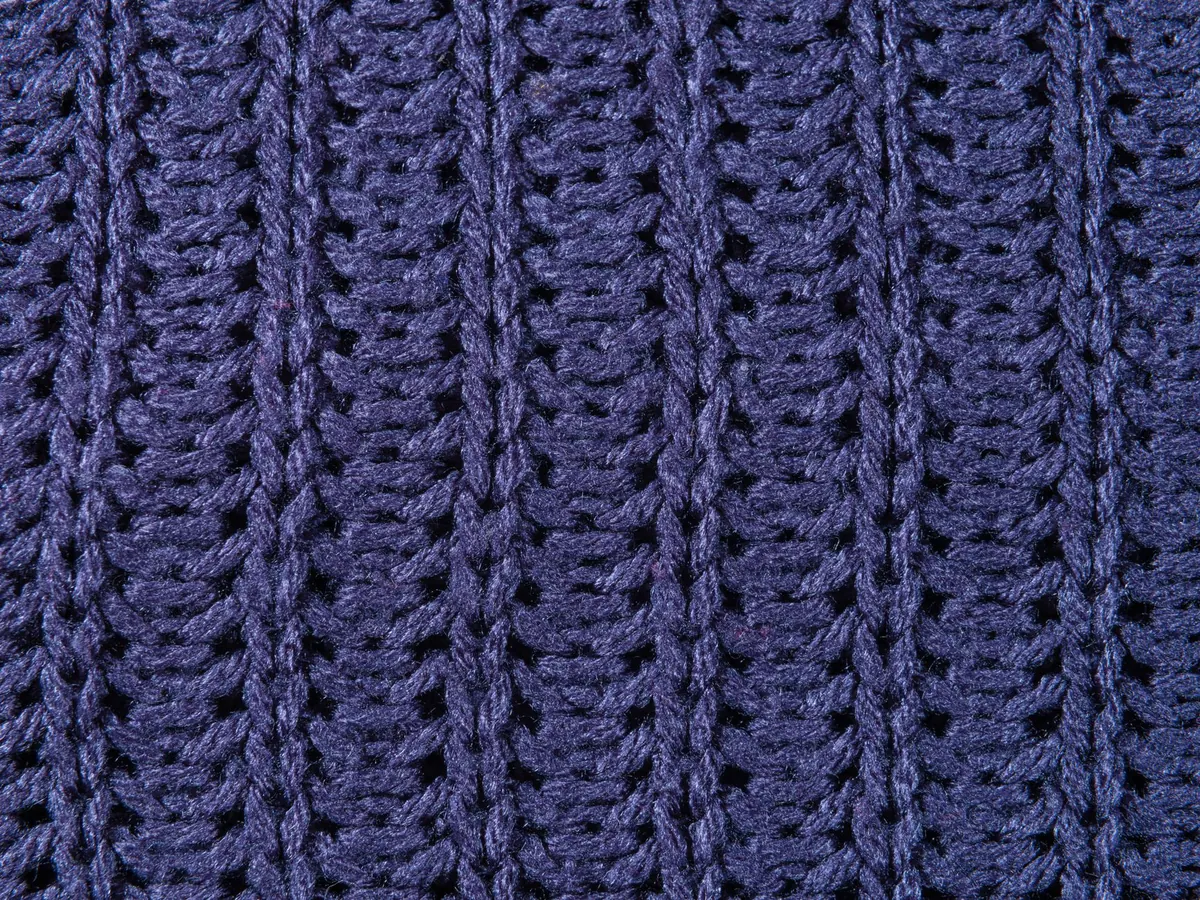
Gauge is the number of stitches per inch, and in machine knitting you'll often see it as a machine number such as 3gg, 7gg or 12gg. Higher numbers mean finer yarn and a tighter, smoother surface. Lower numbers mean chunky, airy stitches. A 12-gauge merino crew neck drapes and skims. A 3-gauge lambswool one is thick, casual and boxy.
Neither is better on its own — the gauge has to suit the style. Many listings give a garment weight in grams, and a featherweight "oversized" wool jumper is a warning. Hold a fine knit up to a window when it arrives: if light comes through in patches, it will do the same with your shirt underneath.
Read the Seams and Edges
This is where quality shows most clearly, and where thin photography is most suspicious. Look for close-ups of the shoulder, the neckband, the cuff and the side seam. If there are no close-ups, that's a red flag. A well-made knit has seams that lie flat and don't pucker. The neckband should be firmly attached, ideally with a double layer or a sturdy rib that springs back. Cuffs and hems should have good recovery — stretch them gently and see if they return to shape. Check the inside: if you see loose threads, serged edges that look raw, or a contrast color peeking through (like white yarn inside a black sweater), the maker cut corners. A linked seam, where the stitches are joined row by row, is a sign of care and durability.
Check the Shoulder and Neckline Construction
Shoulders take the weight of the garment, so they need to be strong without being stiff. A set-in sleeve should have a smooth curve at the armhole, not a bunch of fabric. Raglan sleeves are more forgiving but can stretch if the knit is heavy. Drop shoulders are casual and easy, but they can sag over time. Look at the neckline: a crew neck should sit close to the collarbone without gaping when you bend forward. A V-neck should have a clean, reinforced point. If the neckband is just a single layer of thin ribbing, it will likely wave and lose shape after a few wears. Fully fashioned shoulders, where the decreases are knitted in rather than cut and sewn, are a hallmark of better knitwear.
Look at the Size Chart Numbers, Not Just S/M/L
Sizes vary wildly between brands, and a "medium" can mean anything from a 36-inch chest to a 44-inch one. The measurements that matter most are chest (pit to pit), body length, sleeve length from shoulder, and shoulder width. Grab a sweater you already love, lay it flat, and measure it. Compare those numbers to the chart. If the listing only offers S/M/L with no measurements, that's a gamble. Also check the model's height and the size they're wearing. If the model is 5'10" in a small and the sweater looks oversized, it will swamp someone 5'2". And if the chart says "one size fits most," it rarely does.
Read the Care Label and Expect Pilling
All natural fibers pill to some degree, especially cashmere, merino, and wool blends. A listing that promises "no pilling ever" is either lying or using a synthetic that will pill anyway. Look for care instructions: hand wash cold and dry flat is standard for wool. Superwash merino can go in the machine, but it may stretch with heat. If the label says dry clean only, ask yourself if you'll actually do that. A good sign is a brand that includes a small knit comb or a pilling stone, and that tells you upfront how the yarn will behave. If the care label is missing from the listing, email the seller. Their answer tells you a lot.
Analyze the Reviews and Customer Photos
Reviews are your best source of real-world information, but you have to read them carefully. Look for specific complaints: "pilled after two wears," "sheds all over my coat," "lost its shape in the wash," "itchy around the neck." Customer photos are worth more than the official ones because they show the true color, the actual fit, and how the knit drapes on a real body. Sort by most recent and by lowest rating. If you see a pattern of the same problem, believe it. Be wary of a flood of five-star reviews with generic text like "love it" posted on the same day — that's often a sign of incentivized reviews.
Check the Color and Dye Consistency
Screen colors are never accurate. A "forest green" might arrive as a bright emerald, and a "cream" might be closer to white or yellow. Look for a color swatch photographed in natural light, and read the description for words like "warm," "cool," or "muted." If you're buying more than one item in the same color, note the dye lot. Natural fibers can vary slightly between batches, and some sellers will mention if a dye lot is consistent. Dark colors, especially indigo and black, can transfer onto lighter clothing, so check if the listing mentions colorfastness. If you're sensitive to dyes, look for undyed or plant-dyed options.
Consider Price per Wear and Brand Transparency
A $200 cashmere sweater that you wear twice a week for five years is a better deal than a $40 acrylic one that pills and looks tired after ten washes. Price per wear is the real metric. Look for brands that tell you where the yarn comes from, which mill spun it, and how the garment was made. Terms like "mulesing-free wool," "traceable cashmere," or "Italian-spun yarn" are good signs. If a brand can't answer basic questions about its supply chain, it's probably cutting costs somewhere you can't see. That doesn't mean you need to spend a fortune — just know what you're paying for.
Know the Return Policy Before You Buy
Finally, check the return policy before you commit. Is it free to return? How many days do you have? Do tags need to be attached? Some knitwear sellers charge a restocking fee or refuse returns on sale items. If you're between sizes, it's often worth ordering both and returning the one that doesn't fit, but only if returns are easy. A generous return policy is a sign that the seller stands behind their quality. If the policy is buried or unclear, ask before you buy. A quick email can save you a lot of hassle later.
The best knitwear purchase is the one you'd make again. If a sweater passes all ten checks, it's likely to become a favorite, not a regret.
Photo: Nati / Pexels
You Might Also Like
A practical guide to the shoulder room, sleeve width and fabrics that let a winter coat sit comfortably over thick sweaters — and the fit checks worth doing before you buy.
Which knits to wear under a winter coat, in what order, and how thick each layer should be to stay warm without the padded look.